SEFIX Competency-Based Job Description
Objectives
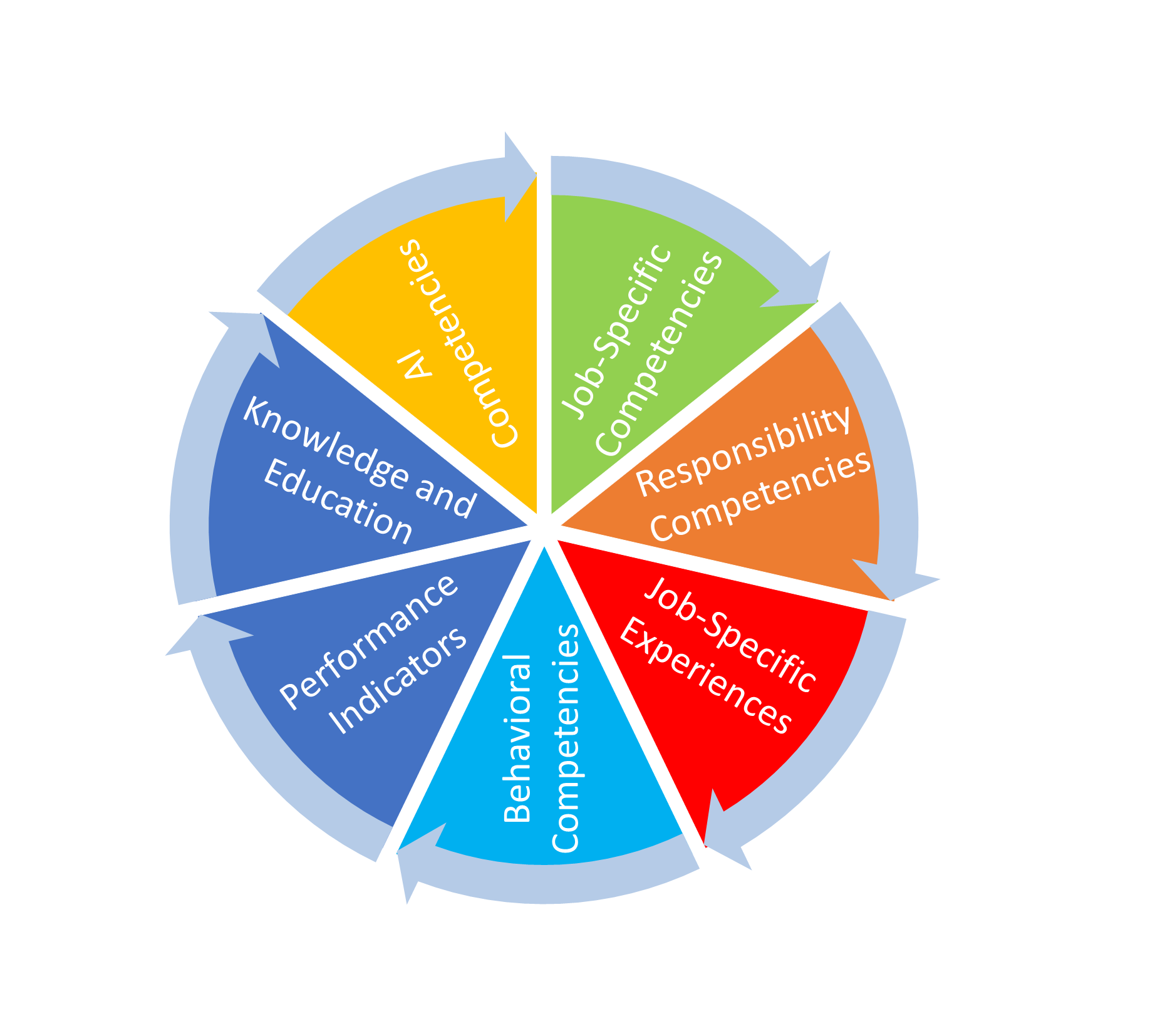
The SEFIX Competency-Based Job Description (CBJD) is a modern, competency-driven approach to defining roles with greater precision, transparency, and strategic value. Unlike traditional job descriptions that focus mainly on duties and qualifications, it integrates capability requirements, measurable outcomes, and future-ready skill expectations to support smarter workforce planning and talent management.What is Included!
Its core components include job responsibilities, role purpose, job-specific hard skills, job-specific soft skills, business domain or industry expertise, AI applications and tools, knowledge and education requirements, and performance indicators covering personal, organizational, and project contributions. It also recognizes practical experience through domain-specific “flight hours,” reflecting the depth of real-world expertise gained over time.Benefits Takeaways
By combining role expectations with competency intelligence, the SEFIX Competency Job Description helps organizations improve recruitment accuracy, employee development, promotion decisions, succession planning, and digital transformation readiness, while giving individuals a clear roadmap for career growth and professional excellence.SEFIX Competency-Based Job Description (CBJD) Structure
The Competency‑Based Job Description Structure provides a standardized way to define roles by linking responsibilities directly to required skills and competencies. Unlike traditional job descriptions that focus mainly on tasks or titles, this structure emphasizes the capabilities, behaviors, and outcomes expected from each role. It ensures alignment between workforce skills and organizational objectives, supports transparent recruitment criteria, guides targeted learning and upskilling, and enables fair performance evaluation. By embedding competencies into job descriptions, the company creates a consistent framework that connects individual career growth with business needs, strengthens client assurance, and enhances workforce readiness across all divisions.
CBJD Responsibility (Responsibilities and duties)
Job Responsibility refers to the obligation to perform specific tasks or duties to achieve certain results. In other words, responsibility is the duty of an individual to carry out the tasks or assignments given to them.
View example »CBJD Role (Roles)
A role is a set of connected behaviors, rights, obligations, beliefs, responsibilities, and norms as conceptualized by people in an enterprise environment.
It is an expected or oriented or continuously changing behavior and in order to have a given job title or good career path.
View example »Job-specific hard skills (Software Engineering domain)
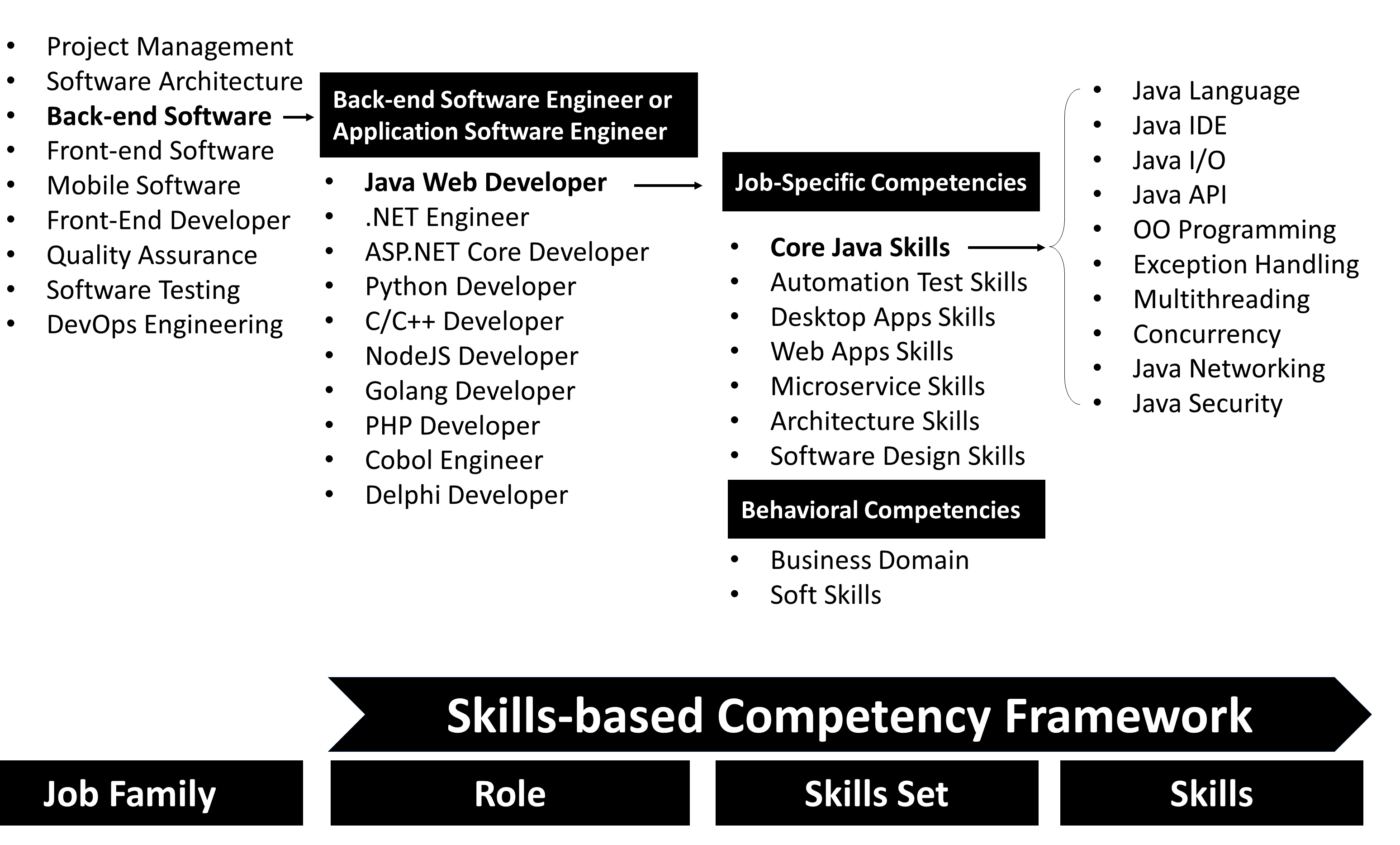
Job-specific skills refer to the particular abilities, knowledge, and expertise required to perform the tasks and responsibilities associated with a specific role or profession. These skills are often specialized and directly relevant to the particular industry, position, or job function.
- Technical Skills: Specific tools, software, programming languages, or methodologies required for the role. For example, for a software developer, job-specific skills might include proficiency in programming languages like Python, Java, or C++.
- Industry Knowledge: Understanding the terminology, trends, and best practices specific to an industry. For instance, in finance, a job-specific skill could be financial modeling or knowledge of financial regulations.
- Certifications: Credentials that demonstrate a level of expertise or training in a particular field. For example, an IT professional might have certifications like Cisco Certified Network Associate (CCNA) or Microsoft Certified Solutions Expert (MCSE).
- Tools and Software: Familiarity with specific software or tools used in the job. For example, a graphic designer would need to know how to use design tools like Adobe Photoshop, Illustrator, or InDesign.
- Methodologies: Specific methods or approaches used in the job. For instance, in project management, knowledge of Agile, Scrum, or Waterfall methodologies could be considered job-specific skills.
Job-specific soft skills (Software Engineering domain)
In the IT industry, job-specific soft skills are interpersonal or "people" skills that complement the technical abilities required for success. These soft skills are crucial because they help professionals navigate team dynamics, communicate effectively, adapt to change, and contribute to the success of projects.
Business domain or industry skills (Software Development domain)
In the context of software development, various business domains or industries have specific requirements, processes, and skills that are crucial for creating effective software solutions.
- Finance & Banking
- E-commerce & Retail
- Healthcare
- Manufacturing & Industrial
- Telecommunications
- Education & E-learning
- Logistics & Transportation
- Real Estate & Property Management
- Media & Entertainment
- Government & Public Sector
- Hospitality & Travel
AI Applications and Tools
Knowledge is the awareness or understanding of something, whether theoretical or practical, such as facts, information, specifications, or skills. It is acquired through experience (evaluation or endorsement) or education (with certification) by learning, perceiving, discovering, or doing.
Knowledge and Education
AI applications and tools for software development have become increasingly popular for automating tasks, enhancing productivity, and improving the quality of code. Here’s a list of AI applications and tools that can be leveraged in various stages of software development:
- Code Generation & Assistance
- Automated Testing
- Bug Detection & Code Quality
- AI for Debugging
- Automated Documentation
- Code Refactoring & Optimization
- Natural Language Processing (NLP) for Code
- AI-Powered Design
- AI for Performance Monitoring
- Chatbots for Developer Support
- AI in Version Control
Performance Indicators
Personal Contribution
Personal contribution refers to the individual’s specific input, effort, or work in a project, task, or role. It highlights the unique and direct impact a person has made within their responsibilities or areas of involvement. It emphasizes what the individual directly contributed, as opposed to the general team effort or larger company goal.
- Bottom line impact
- Productivity
- Positivity
- Reliability
- Creativity
- Diplomacy
- Marketability
Organization Contribution
Personal contribution refers refers to the efforts, actions, or results that an individual, team, or department has made toward achieving the broader goals or success of the organization as a whole. This can encompass a wide range of activities, including strategic initiatives, process improvements, leadership roles, and other contributions that directly or indirectly impact the company's growth, culture, or operational efficiency.
Project Contribution
Project contribution refers to the specific roles, tasks, and efforts an individual has put into a project. It highlights the direct involvement or impact a person has had in ensuring the success or completion of the project, whether it’s in the planning, execution, or delivery phases. It also emphasizes what you’ve specifically done to drive the success of the project, highlighting your individual input in a team or collective effort.
Work Experience (Fly hours in specific domain)
Candidate needs to list their years or months of work experience to reflects the amount of time they've spent engaged in specific tasks or roles that are either directly related to or occasionally outside of their main job responsibilities.
- In-Scope Activities: These are tasks that fall within the direct responsibilities or duties of the person’s role. For instance, if someone is a software engineer, their work on coding, testing, or designing software for a project would count as work experience.
- Out-of-Scope Activities: These are tasks that are outside their typical domain but still contribute to their overall skill set. For example, if the same software engineer takes on a project management role in a team or works in an unrelated field like client communication, that might also count as experience, though it's outside their specialized domain.